 By 2019, online video traffic will account for 80% of all consumer Internet traffic reported Forbes contributor Mark Templeman. But the costs, time and resources needed for creating videos are often a barrier. Publishers agree that adding video along with text articles can drive engagement and the amount of time spent on a website.

Showing posts with label Traffic. Show all posts
Showing posts with label Traffic. Show all posts
Relevant Video Content Drives More Engagement And Revenue in 2019-2020
By 2019, online video traffic will account for 80% of all consumer Internet traffic reported Forbes contributor Mark Templeman. But the costs, time and resources needed for creating videos are often a barrier. Publishers agree that adding video along with text articles can drive engagement and the amount of time spent on a website.How to Increase Blog Traffic: The Complete Blog Traffic Guide
 how to increase blog traffic is an essential skill, not only for professional bloggers but for anybody who wants to attract the maximum number of visitors to their blog. This complete blog traffic guide will help you to achieve that.
Running a successful blog takes a lot of hard work, passion and commitment.
WESTLAND STORAGE BOUNTY..INVEST IN REAL ESTATE AND EARN PROFIT DAILY + 100$ ON SIGNUP!
 Westland Storage is an amazing project that combines real estate investments with cryptocurrency, allowing any user to become a share holder of real estate and start earning profit! They also currently have a bounty program running that allows you to earn without investing! Complete tasks and get tokens, which generate daily profit for you! Currently, these include facebook tasks, twitter tasks and inviting friends.
Best StrategyTo Earn $100 A Day With Google AdSense
10 Simple Ways To Generate New Blog

When a person takes a decision to become a blogger, he has the excitement, engagement and also plans, goals, etc. But, what happens when the time being?
He loses the motivation, ambition to create a successful blog and also blog post ideas which make the blog (his business) more consistent.
Improving Blog Traffic: 5 Must-Have Qualities
 Back then, most blogs were daily ramblings of a personal nature with
no high traffic or page views as target. Today, the situation is totally
different as we see a variety of blogs created to achieve high traffic
with many purposes such as monetization.
Back then, most blogs were daily ramblings of a personal nature with
no high traffic or page views as target. Today, the situation is totally
different as we see a variety of blogs created to achieve high traffic
with many purposes such as monetization.
There’re many practical ways to achieve high traffic like creating
detailed tutorials that readers eager to learn, or talks about certain
hot topic which targeted readers are interested to read on and comment.
These methods are actually basic knowledge for most bloggers, but only
few are successful in achieving high traffic with them. This is simply
because they not only know how to do it, but do it well.
In this editorial post, I will be suggesting a few critical qualities
that I believe such blogs must have in order to retain their audience
and attract even more, in other words, achieve high traffic. These 5 must-have qualities will be the least it will take to boost the traffic with consistency remained.
1. Consistency – Managing Expectations
The rule of the thumb for such blogs is to be consistent. By consistent, I’m not just referring to the content of the posts or your personal views expressed, but also the frequency of your updates, your writing style
and so forth. We are, after all, creatures of habits who prefer things
to be in order, in manners which we can anticipate a certain level of
standards. At the very least, consistency would promote loyalty for your
readers who have gotten used to your unique blogging style.

The content of your posts should be confined within the particular theme
which you have set for your blog. If it is primarily a discussion blog
on concurrent social or political issues, stick with that. Chances are
that the narrower your topic is, the more specific your target audience
will be, and thus the more likely your posts would appeal to them.
Consistency in your views should ultimately create a personality
for yourself and the blog, so that your readers can relate to it. Of
course, this doesn’t mean all your opinions will be cast in stones; you
are definitely free to switch sides as you deem fit. Just remember that
when people are reading your posts on a regular basis, your blog
gradually get personified as a human being with preferences, opinions
and even values.
Needless to say, you would need to feed your loyal fans with a
regular dosage of posts, lest they seek elsewhere to satisfy that need.
If you post three entries a week, you can stick with that. If you post
just one per week, that’s fine too. The idea is to maintain a steady rate of posting, so that readers will soon form an accurate expectation on the frequency of the updates.
Writing style shouldn’t be an issue if you are blogging alone, unless
perhaps your writings frequently fluctuate along with your mood swings!
If, however, you are working as a team with multiple writers for the
blog, you should standardize a certain writing format so as not to confuse the readers.
Then again, if you decide that variety would do the blog good by
offering readers more opinions, you’ve got to show the readers clearly
who the author is, preferably with a portrait photo for them to identify
with. In such cases, the consistency factor is being played on the
individual authors rather than the entire blog itself.
2. Credibility – Ensuring Reliability
Nobody likes to read a blog full of erroneous or inaccurate
information. Neither do they enjoy posts that don’t provide enough
opinions to give them food for thought.
You need to establish a certain level of credibility in order for readers to take in what you have to say. To do that, you’ve got to fathom the issue raised at the tip of your fingers.
How? Well, if you are working in a diverse team, topics can be assigned
to editors with expertise in those areas. At the very least, their
research efforts will be channelled efficiently on a limited number of
topics which they are allocated with, such that they will eventually
gain expertise. If you are writing alone, you might consider
specializing your blog on topics which you are especially knowledgeable
with.

Another way to show readers that your information is trustworthy is to cite sources.
Doing this will not only give rightful credits to the sources, it will
also provide readers a sense of assurance that you aren’t just assuming
facts. As a matter of fact, citing sources is a standard practice in the
academic universe to prevent plagiarism and such.
One thing to note though, is that facts are to be separated from opinions.
It’s not wrong to voice your own judgments and arguments on matters,
but it is a deadly sin to be inaccurate in what you proclaim to be
facts. In the latter case, it amounts to misleading your readers. It is
hence your responsibility as a blogger to get your facts right first. Do your research well before you start writing.
3. Focus – One at a Time
Have you ever had a group meeting where each member compete to give
their take on the situation, fail to compromise with each other, and
ended up going nowhere with the discussion? It’s kind of how it is when
your posts becomes too diluted with too many issues at one go. Having too many arguments or questions in a single post overwhelm readers and render them clueless about what to discuss.
Yes, perhaps the purpose of your blog was to address a broad societal
concern that encompasses quite a number of potential issues. As a
whole, your blog should rightfully cover all of that in fair amount.
However, when it comes to individual posts, try not to cramp too much info into a single entry.
Imagine how messy the comments will be like if they do not refer to the
same issue within the post. The discussion will be a very distracting
one where everyone only wants to talk about the part which they are most
interested in. It would be like the group meeting scenario I had just
mentioned.

So, be clear of the agenda behind each of your post.
What exactly do you wish to bring to the table? What personal opinions
and views do you want to bring across to them? How do you want readers
to engage in the discussion through the points you’ve made? These are
only some of the more generic questions to ask yourself before you
decide on the approach for your piece of writing.
Fortunately, you can still moderate the discussion
to some extent at the first sign of digression. If the comments seem to
drift off to an unrelated topic, you can always post a comment yourself
to bring the focus back on track. A superb way to do that is to post an
intriguing question about the post and challenge everyone to comment on
it.
4. Creativity – Trial & Error
This might seems like a contradiction to my point about being consistent, but it doesn’t have to be so. Your blog can be consistent, and yet not rigid.
Think of it this way. There is a boundary which you should adhere to,
and that is where you maintain your theme of the blog, writing style,
etc. Within the border though, there is a large space for you to roam
and experiment with your blog. So long as you don’t go
beyond that and obey the fundamentals of ensuring a reputable blog, you
are free to think out-of-the-box and shakes thing up a little.

Write in a controversial post, put yourself in the context of those
who disagree with you or come up with a new design every once in a
while. Play with ideas like these and see how your readers respond to
them. If they react negatively, not to worry, because you would’ve
already establish yourself as a consistent and reliable blogger. You can
return back to the safe zone for your blog and abandon the concept
altogether. If you sense that they like it, then you are one step closer
to understanding what makes your blog ticks.
As they always say, you’ll never know until you try… within limits and in small doses though.
5. Engagement – The Community Spirit
A blog is pretty much a social gathering of like-minded people
interested in the topics presented. I’m sure your idea of such a blog is
that of an online community, where everyone gets information and ideas
from your entries and share their personal thoughts with the rest.
Everyone benefits as they learn from each other through posts and
comments, and think critically about what were brought up.
Yet, sometimes we see that readers get a little passive and seem hesitant with discussing. Why is that so?
Well, it could be the way you write your post. In order for a lively discussion to occur, you need to provide some form of stimuli or trigger for the readers.
It’s good practice to post thought-provoking questions at the end of
your post since it will let readers know what to comment on and ensure
that they don’t stray off-topic. If, however, you prefer an open
discussion rather than directing it in any way, you can at the very
least include in a line asking them to comment on what they think or
feel.

Another way to incorporate the online community spirit is to give readers themselves a chance to post entries.
As I emphasized on creativity in the previous point, you might try
something novel and engaging for your readers by setting up a contest.
As we all know, some blogs have the ‘like’ function for each comment
posted, and that potentially indicate the popularity of a certain
perspective or opinion. Readers can be asked to post a complete entry
about their views on a specific issue, and the comment which garnered
the most number of ‘like’ votes will get to be featured on the blog.
Also, make it a point to provide a convenient channel for the readers to feedback
to you. In your blog, the readers are essentially your customers, and
you as the blogger will need to address their needs and complaints. Put
in your email address for them to contact you. Let them connect with you
through social media like Facebook. Let them feel they are part of your blog community.
Why Consistency is Key for Your Blog Success
 While there are many things that contribute to blog success, none is
as vital as consistency. Sadly, many believe that there is any easy
route to blogging success. That’s why they relax or lessen their
blogging efforts once they launch and get some blog traffic.
While there are many things that contribute to blog success, none is
as vital as consistency. Sadly, many believe that there is any easy
route to blogging success. That’s why they relax or lessen their
blogging efforts once they launch and get some blog traffic.
Consistency does not only mean keeping your blog up to date by
publishing new or fresh content periodically, it also means maintaining
the look of your business blog and the passion and gusto to engage your
audience. I want to reiterate that consistency is a major determinant
of blogging success, and in a short while, you will know why.
Consistency Nurtures You to be a Niche Leader
I know that many bloggers want to top their niche and get accolades
and recognition for what they do in their respective industries. Trust
me, every blogger dreams of becoming a niche leader
when he/she first ventures into blogging. The truth is; it takes
consistency to become a niche leader and to achieve blogging success.
You’ve got to start somewhere and grow your blog over time to gain
recognition. If you blog consistently and judiciously, then you will
accelerate your growth and the popularity of your blog.
Consistency Creates the Right Brand Image
Your blogging success also depends on the impression or image that
your brand creates. To succeed, you have to brand your blog in a way
that helps attracts more readers and retain the existing readership.
Examine the look and feel of your blog and determine whether or not it
is consistent with your brand image.
You have to create the right impression to readers and visitors every
time they visit your blog. Don’t keep changing theme, colors, fonts, and
avatars from time to time. It’ll make you look inconsistent something
which may not augur well with the majority of your readers. But, if
you’re consistent, you’ll make readers want to associate with your blog
as they are used to it.
Consistency Creates a Community
The majority of bloggers want to get an audience by using content
marketing to build a community of readers overnight. Is that possible? I
don’t think so. You can only attract an audience if you blog
consistently. It’s not enough to use email marketing
or online video marketing to get an audience, you have to maximize the
use of your blog and do it consistently. Let’s look at it this way. If
you blog once every two weeks and someone else blogs twice a week, who
between the two of you will attract more readers quickly?
Certainly, it is the person who blogs twice a week. Some readers are
voracious. They’ll read everything there is to read and if you don’t
publish new or fresh content then they’ll look for someone who keeps up
with their appetite for reading. Anyway, the predominant point here is
that you stand a better chance of building a community of readers and
succeeding in attraction marketing if you blog consistently.
Consistency Makes You Credible
In his Book, “Influence: The Psychology of Persuasion”, Robert B, Cialdini
states that someone who is not consistent could be misconstrued as
“fickle, uncertain, pliant, unstable, and scatterbrained”, on the other
hand, someone who is consistent is viewed as “assured, trustworthy, and
sound.
The same thing also applies to blogging. Consistency and commitment
are two key factors that determine blog success. From a psychological
point of view, consistency makes your readers and audience get
accustomed to your blogging style and content. Once readers develop a
good impression about your blog, they will come to see you as a credible
blogger whom they can always trust and look up to for inspiration and
guidance on niche or industry related issues.
Consistency Increases Brand Strength
You may have never given it much thought, but do you also know that
consistency builds the strength of your brand? The way you communicate
and present your brand messages increases your influence and brand
strength. However, many people define blogging success in terms of
readership, online lead generation, and subsequent sales and revenue and
so they miss out on brand strength.
When you blog consistently, you create the impression that you brand
or business is here to stay. This induces brand loyalty and improves
your network marketing
influence and reach. Readers and customers don’t want to jump from
brand to brand, but if you’re not consistent, then you’ll give them the
impetus to leave you and engage another business or brand. So, you have
to keep the flame of consistency burning so that you brand can appeal
to new readers and remain relevant to existing readers.
Consistency Makes You Stick to Your Purpose
Though many people want to achieve blogging success, many don’t have
the consistency to help them fulfill their purpose and achieve their
goals. Unfortunately, many people forget their purpose when their blogs
start receiving massive traffic. When this happens, they change their
purpose and shift focus to something else. They get all over the place
talking about subjects or issues that don’t even relate to their niche
or industries.
Surely, you don’t have to talk about personal life or what went down
in the hood, or other innuendos. Deviating will make you look
unprofessional to your readership. So, no matter what happens, you’ve
got to stick to your purpose and be consistent. If you remain true to
your purpose, you will remain relevant to your reader. Remember,
blogging success doesn’t just come by increasing your readership, rather
it comes when you stick to your original purpose.
You can only grow your blog and increase your internet marketing
influence as a niche leader when you blog consistently. However,
blogging success doesn’t come overnight. It takes effort, dedication,
and consistency to succeed with your blog. You only need to maintain
consistency in purpose, brand image, and brand promotion through content
marketing and social media marketing. When you do this, you will increase your influence and remain relevant to the existing readers.
Let me know how you have been blogging and some of the things you
have been doing consistently so as to achieve blogging success.
5 Best BitTorrent Trackers and Indexes
 If
you’re a long-time Internet user like me, you may be surprised when you
stop to think about the face that, though the P2P landscape was once in
constant flux (Kazaa, anyone? LimeWire?), as of 2012 it’s been pretty
quiet for a few years. Legal action was always one of the reasons for
the rapid innovation in this sector, and while many tracker sites have
been targeted and taken down, the BitTorrent protocol itself seems to be
pretty securely established as the most popular way to share large
files.
If
you’re a long-time Internet user like me, you may be surprised when you
stop to think about the face that, though the P2P landscape was once in
constant flux (Kazaa, anyone? LimeWire?), as of 2012 it’s been pretty
quiet for a few years. Legal action was always one of the reasons for
the rapid innovation in this sector, and while many tracker sites have
been targeted and taken down, the BitTorrent protocol itself seems to be
pretty securely established as the most popular way to share large
files.
Here are the most reliable, reputable (though that’s a relative term
here) survivors of this evolutionary winnowing. As of press time,
they’re all online and functioning well. Naturally, I’m not condoning or
advising the use of BitTorrent to violate copyright or any other laws.
File-sharing itself is of course legal; it’s up to you to do the right
thing and avoid downloading copyrighted content, like, say, Spike Lee’s Do the Right Thing.
The good news is, the media industry’s finally gotten its own act
together enough that you can access their properties in a convenient,
above-board way, with Hulu, Netflix, Amazon, and iTunes all providing
thriving media marketplaces that support content creators through
advertising, subscription, or a la carte revenue models. Still, those
sites can’t have everything, and there are many other types of files you
might want to get your hands on. For moments like that, here are the
five best torrent sites:
1. Thepiratebay.se
The infamous Swedish torrent site and political cause célèbre
is still going strong, though nowadays it’s not a tracker but just an
index, as technological developments have allowed for a much more
decentralized torrent universe than before. With over four million
torrents, The Pirate Bay remains a defiant bastion of internet freedom
(or anarchy, depending on your position).
2. Demonoid.me
This is my first go-to when looking for a clean, quality file.
Formerly a private tracker with strict upload/download ratio
requirements, the site has relaxed its rules in that regard, though
registration may still be required. By combining a vast selection with
an active community that eliminates flawed or dangerous files, Demonoid
is the perfect public/private hybrid tracker.
3. Torrentz.eu
With a nice, clean, Google-style front page and a healthy 19 million
torrents in its index, this site is nowadays one of the most active and
dependable, though there’s so much here that sometimes it may be hard to
separate the wheat from the chaff.
4. Kat.ph
Formerly known as kickasstorrents.com, a domain they dropped due to
copyright concerns, this tracker features a pleasing, easily navigable
interface and an active forum community.
5. Karagarga.net
The art-house cinema of the internet, Karagarga is a private tracker
that bans all mainstream commercial content. Need to find an obscure
1930s Soviet film for a term paper you’re writing? Looking for some
Javanese field recordings? Want a collection of PDFs of Brecht plays?
This is the place for you, if you can finagle your way in – good luck
finding an invite!
As always, surf safe, don’t break any laws in your jurisdiction, and enjoy!
Mariana Ashley is a blogger and freelance writer, whose posts offer a college guide and news for prospective students and parents.
How To Drive More Traffic To Your Blog

If you want to attract a strong readership for your blog, it’s obvious that you need to create great content. But that’s not sufficient: amazing content that doesn’t get read might as well not exist. To build a thriving blog, you also need to learn to drive traffic to it.
So what methods do the experts use? We’ve compiled a list of 13 tried and true ways to build your audience.
- Incorporate social influencers into your blog posts (where relevant). Writing about, say, social media? If you cite a prominent example like Gary Vaynerchuk, it’s a win-win: your post has more credibility because you’ve cited a specific example, and the thought leader in question may be inclined to promote the blog among his or her communities, since it mentions them favorably. Same goes for any niche community, whether you’re citing socially-savvy surfers or sushi chefs.
- Add a link to your latest article in your Twitter bio and ask for retweets. Use your Twitter “real estate” by linking to your latest article in your Twitter bio. You can also drive social sharing by specifically asking others to retweet it. (If you create huge amounts of content, you can’t do this all the time, but it’s powerful when used sparingly.) Indeed, a study by Social Bakers of thousands of brands on Twitter found that users who asked their followers to “RT” their tweet received 73.48 average retweets per tweet. Compare that with just 2.09 retweets for those without a call-to-action.
- Send your article out in a blast email or newsletter to your contacts. If you have an e-newsletter (and it’s still one of the most powerful marketing tools today), include links to your blog posts. Your subscribers already like what you do; this nudge can remind them to check out your blog.
- Add a link into your email signature inviting people to read your latest blog post. Think about how many people you email on a daily basis, new and old. This simple practice reminds them you have a blog, and may intrigue them enough to click the link.
- Send your blog post to relevant people/organizations/blogs that would be interested in reading it and sharing it with their networks. You can simply send a message such as, “I recently published an article on the top apps for entrepreneurs and thought your readers might find it interesting.” Offer to reciprocate by sharing or linking to a relevant post of theirs. Daniel’s writer friend Brian Honigman occasionally emails him with a specific ask: will Daniel share an article Brian has written on social media? If Brian were to merely tweet out his article, many people (including Daniel) might miss it, but an email request cuts through the clutter.
- Send your blog post out to any person or entity mentioned. It’s not just social influencers – if you mention a local bakery or car dealership or a software company in your post, send them a link and alert them. It’s likely they’ll be interested in reading and promoting it, as well.
- Share your article on other social networks. Pinterest, Vine, Storify, Digg, Quora, Reddit, StumbleUpon, and Care2 are just some of the many options for sharing your work.
- Share your article on social bookmarking sites. Plenty to choose from here, as well: Newsana is a new, good site, and you should also consider Paper.li, Delicious, Ebaumsworld, Newsvine, Scoop.it, Technorati, and more.
- Tweet your post multiple times, with different teaser quotes. The first time you tweet about your new post, merely make it the title of your article (“13 Innovative Ways to Drive More Traffic to Your Blog”). The second time, you can quote from the article or summarize key points (“Tip to increase blog readership – send a link to anyone you mention in your post”). For your third, you can pose a question (“Do you want to dramatically increase your blog readership?”). This prevents you from looking like a spammer, and different headlines may capture different readers.
- Leverage Google Authorship. As SEO expert Jayson DeMers has discussed, signing up for Google Authorship allows your author profile to appear by your posts and connects it with your Google+ profile.
- Utilize LinkedIn groups. Post the blog via relevant LinkedIn groups. You can join up to 50 groups and many have thousands upon thousands of members—dramatically increasing your potential reach. For instance, if you’re a woman in social media who lives in New York, you might consider joining the “Social Media Marketing” group, with over half a million members.
- Include visual content and videos. Study after study has found people engage more with images, infographics, videos, and the like. It’s a powerful way to get readers connected.
- Make your blog SEO friendly. Include a headline that users might search for in Google, such as a “how to.” Repeat keywords from your headline in your post (but not too frequently, or you’ll look like a spammer). And make sure to link to credible outside sources and think about how you can truly add value to the reader. What Google and other search engines seek to prioritize is quality information.
As you can see, it takes actual work to promote your article. But the good news is that there are more resources today than ever before.
Have you effectively used these methods to drive traffic to your blog? Do you recommend other strategies? Let us know in the comments section below.
Dorie Clark is a marketing strategist who teaches at Duke University’s Fuqua School of Business. Learn more about her new book Reinventing You: Define Your Brand, Imagine Your Future (Harvard Business Review Press) and follow her on Twitter.
Daniel Vahab is a journalist and social media community manager. His writings have appeared in Mashable, Yahoo! News, U.S. News & World Report, The New York Times, The Huffington Post, and more.
10 Ways to Increase Your Business Blog Traffic by 227 Percent
 The goal of any professional blog is to get people to click, read, engage and share -- in that order. Enticing them to do so can vastly increase your business visibility and drive exponential future sales. While there is no substitute for writing quality, human, dynamic content, knowing how to maximize blog traffic can make all the difference between attracting a big crowd online... or just hearing crickets.
I've worked with multiple companies as content marketer, measuring the traffic to their company's blog posts before and after I took over, and here's what I came up with: these 10 tips increased their blog traffic by at least 227 percent. Of course a specific percentage of growth can't be guaranteed, I assure you that instituting these practices into your blogging will help your business, too.
1. It's all in the title.
The title of your blog is THE most important factor in getting your blog opened. Since it's the first thing a potential reader sees, a good title catches the viewers attention, creates some controversy, plays off a common saying, mentions newsworthy keywords or names, hints at conflict, delineates action, and maybe proposes a question that the reader now wants answered. Oh, and it has to be short! Remember that it should fit well within 140 characters (for Twitter, with room for it to be retweeted and the link.)
Be clear, concise, and direct, but also propose a new angle or creative take on a topic in order for your title to get clicked. Remember that people are bombarded with choices, so choose a title that jumps out at them!
 2. Add value.
 A blog should have a purpose, a main directive. It could be just to entertain (I love "fluff" pieces every once and a while), provide education, tell a story, or to solve a problem. But the information should always add some sort of value to the greater Internet conversation, never just recycling exactly what's been covered before. Keep the reader in mind when writing your blog, addressing an issue, challenge, or universal experience they have. Remember to keep it super simple - blogs that try to do too much or are hard to follow don't get read or shared.
3. Shorten your website URL.
Make sure you have a short URL that's easy to spell and remember! I've made that mistake before with my website URL, NormSchriever.com. The problem was that no one on earth could spell 'Schriever' properly (including me before I've had coffee in the morning.) I suspect I lost a lot of people to Maria Shriver and Justin Beiber's websites when they were really looking for my last name. So I added the domain URL NormWrites.com, which is easy to remembered when I'm reciting it on a radio show, via social media, or yelling it at someone before I've had my coffee.
Make sure you have a short URL that's easy to spell and remember! I've made that mistake before with my website URL, NormSchriever.com. The problem was that no one on earth could spell 'Schriever' properly (including me before I've had coffee in the morning.) I suspect I lost a lot of people to Maria Shriver and Justin Beiber's websites when they were really looking for my last name. So I added the domain URL NormWrites.com, which is easy to remembered when I'm reciting it on a radio show, via social media, or yelling it at someone before I've had my coffee.
You can also shorten your long blog link to a shorter URL through TinyUrl.com, Hootsuite, etc. which makes it easier to share and retweet.
4. Photos.
Let's do a little test. Are you more likely to read this version...
Let's do a little test. Are you more likely to read this version...
 4. Photos.
...Or this one? Use photos with every blog you write, without fail. They catch our eye, anchor our attention as we process what's in the photo (see mind mapping below) and blog links are far more likely to be clicked if they have an engaging photo. The same concept applies for sharing your work on Pinterest, Instagram, and Facebook to attract an audience. Remember what they say, a picture is worth 1,000 words!
5. Stamp your photos.
Subtly stamp your name, company name, website, etc. in the bottom corner of your photos. No matter where that photo appears it will serve as a mini billboard for you and your company, and help sites like Instagram and Pinterest market for you. There are plenty of cheap or free photo stamping apps that work from your laptop or phone.
Subtly stamp your name, company name, website, etc. in the bottom corner of your photos. No matter where that photo appears it will serve as a mini billboard for you and your company, and help sites like Instagram and Pinterest market for you. There are plenty of cheap or free photo stamping apps that work from your laptop or phone.
6. Give something away.
Offer the readers something for free in your blog, but don't be afraid to surrender control of your content without asking for an email or any other strings attached. People are savvy. If you give people quality content that provides value, they'll reach out to you, spread the word, or come back to order more in the future. If they don't like what you have to offer, then having their email address doesn't do you any good. Give 'em the good stuff and leave 'em wanting more - the first rule of show biz.
Offer the readers something for free in your blog, but don't be afraid to surrender control of your content without asking for an email or any other strings attached. People are savvy. If you give people quality content that provides value, they'll reach out to you, spread the word, or come back to order more in the future. If they don't like what you have to offer, then having their email address doesn't do you any good. Give 'em the good stuff and leave 'em wanting more - the first rule of show biz.
 7. Write evergreen information.
Sometimes you want to be on the cutting edge of breaking news but don't neglect writing blogs with "evergreen information" that isn't based on current events so it won't become irrelevant quickly. Blogs with evergreen information never become outdated so they can be read, shared, and grow an audience over time without limitation.
8. Post around notable dates.
Timing is everything when writing your business blogs, so keep informed of notable dates, events, and holidays. There are also plenty of whacky days (National Peanut Butter Day) and months to raise support for a cause (Breast Cancer Awareness Month.) Planning a blog around an upcoming holiday or season change (like back to school, spring cleaning, etc.) gives you plenty of time to get it posted and gain exposure with readers as the date approaches. The media also starts looking for these stories on short notice and may pick up your blog.
Timing is everything when writing your business blogs, so keep informed of notable dates, events, and holidays. There are also plenty of whacky days (National Peanut Butter Day) and months to raise support for a cause (Breast Cancer Awareness Month.) Planning a blog around an upcoming holiday or season change (like back to school, spring cleaning, etc.) gives you plenty of time to get it posted and gain exposure with readers as the date approaches. The media also starts looking for these stories on short notice and may pick up your blog.
9. Write content rich in links and key words.
Incorporate plenty of key words into your blog, the same ones a reader might type into a search engine like Google. Mix it up with some quotes from notable people, clickable links to other articles (or blogs you've written) and mentions of famous people, organizations, companies, etc. But don't go overboard until your blog is no longer organic and easily readable -- "Do it, but don't over do it," is the general consensus of social media and SEO experts.
Incorporate plenty of key words into your blog, the same ones a reader might type into a search engine like Google. Mix it up with some quotes from notable people, clickable links to other articles (or blogs you've written) and mentions of famous people, organizations, companies, etc. But don't go overboard until your blog is no longer organic and easily readable -- "Do it, but don't over do it," is the general consensus of social media and SEO experts.
10. Utilize mind mapping.
Mind mapping is a concept that tracks how our eyes and then our brain views, perceives, and processes information, and assigns it context. In the field of blogging, mind mapping will help you incorporates physical cues to keep your audience engaged, like photos, headers, sub headers, bullet points, indents, and even changes in color or font. Remember that a blog of just text is less likely to be read and shared than a blog anchored by a photo and broken into clear, logical sections of information, easy for the brain to follow and process.
Mind mapping is a concept that tracks how our eyes and then our brain views, perceives, and processes information, and assigns it context. In the field of blogging, mind mapping will help you incorporates physical cues to keep your audience engaged, like photos, headers, sub headers, bullet points, indents, and even changes in color or font. Remember that a blog of just text is less likely to be read and shared than a blog anchored by a photo and broken into clear, logical sections of information, easy for the brain to follow and process.
how to Make your blog load faster
The speed at which your blog loads is critical to attracting more readers to your blog. If your blog takes a long time to load, many readers may leave your blog before they have the chance to read it. Here are a few tips and tricks that will help your blog load faster and attract more users:
Posts
Your blog's load time can be affected by the number of posts you display on your main page. You can easily edit the number of posts displayed of the main page from the Layout tab. Click Edit in the Blog post section to change the number of posts you want to display on the main page. We recommend displaying 10 or fewer posts on the main page.
Third Party JavaScript and Links
For optimal blog load speed, we recommend using Google/Blogger widgets, JavaScript and links. However, if you need to use third party JavaScript and links, your blog will load much faster if you put all JavaScript at the bottom of your blog. If you have third party JavaScript and links in your sidebar, put them in at the bottom of the sidebar.
Images and Media
The more images, videos and other multi-media you have on your blog the longer it will take to load. However, images and other multimedia are important to attracting users to your blog, so it is important to optimize the load speed of your images and media. Here are a few tips to increase the load speed of your media:
- Decrease the size of your images or use thumbnails that link to the full-size image.
- If you use third party images, consider uploading them to Picasa Web Albums via the Blogger post editor.
- If you have a large number of images to display, you can upload all your images (from a vacation or event) to a Picasa Web Album and link to the album in your post or sidebar.
Other suggestions
- If you've added any custom CSS to your blog, make sure you put it at the top of the page.
- The most important content of your blog that catches readers attention should load the quickest. To help you identify which items are taking the longest to load you can use Stopwatch. To use Stopwatch, enter your blog's URL into the text box and click "Start StopWatch". Stopwatch will then open your blog in a frame and will record the time it takes for everything on your blog to load, including images, videos, widgets, etc. Take note of the items that take the longest to load and modify them appropriately using our suggestions.
ALSO...
Once your blog is set up, the last thing you want is to lose interested readers because the page takes too long to load.
Make sure that your hard work and effort gets the best pay off possible by making sure your site moves as quickly as the people viewing it. Here are some tips to keep up the pace.
1. Test Your Blog’s Performance
There are add on programs, such as Page Speed, that will test how quickly your blog loads. Firefox and WordPress have plugins that will reduce load time, and some offer helpful tips to increase speed.
2. Optimize Your CSS Code
Think of CSS code as a programming package for web sites. CSS offers different choices for editing and design, just as each new version of Windows offers varying options . CSS optimizers are available online, and you can try out different ones . Look for a program that minimizes the amount of code while providing the design aspects (like font size and coloring) that you prefer. The less code, the faster your blog will run.
3. Remove Blog Clutter
Remember that every picture, string of text, or button on your blog has its own code and eats up space on your server. Are there some ads on your page that no one clicks on? A donate or buy button that is not in use? Perhaps some links to other pages that are outdated and no longer work? Getting rid of these excess bits will make your blog faster, more efficient, and easier on the eye.
4. Consider Moving Away from Shared Hosting
If your blog shares hosting on a server with other web pages, your site may become hard to access during high traffic times. The main time you want to get attention, your readers may end up clicking elsewhere! Dedicated or gridline hosting will take your reader directly to your blog, with less chance of traffic issues.
5. Clean Up Your Plugins
Plugins are nifty little programs that drive traffic to your site. They interface with social media, iPhone apps, or widgets. Do a little research to find out which ones work best for your site, and remove anything that isn’t generating traffic for you. If your blog is on WordPress, you’ll often get alerts sent to your email whenever a new plugin is created or becomes popular.
Be conservative in your use of pictures, buttons and programs. Check your web pages speed, links, and learn how to make code and hosting work to your advantage. Once you have done this, your blog will have the best possible speed, and a better chance of reaching your readers.
How To Make Money From Blogging

There are lots of reasons why you may have written ablog. You enjoy writing. You want to share your views. You want to promote your business. Or maybe you want to make money. Yes, you really can make money from writing a blog. Increasingly people are realising blog writing can in fact be quite a profitable venture, whether it enables you to give up your part-time job, help you finance your studies, or provide extra income to fuel an active social life. You can even earn a full time income from blogging, but remember there is no such thing as “get rich quick” but by following these simple steps you’re be monetizing your blog in no time. When you start making enough money, you can budget it using personal finance software and even write it off in your taxes. And even if your goal of blog writing is not making money, it’s a nice perk.
There are three main ways you can make money from blogging:Advertising, affiliate marketing, and selling products/ services.There are many different ways of how you can make money from blogging within these three categories. Which ones are the best? Well the truth is there is no single way to get rich from blogging. First you need to establish your niche. The techniques you chose will depend on your niche, as well as on your own skills and preferences. But as always not all techniques are equal and there are some highly effective methods that are worth knowing. So here I am going to reveal some excellent ways to make money from your blog. And soon enough you will be pulling in the cash from your blogs.
- Google Adsense – This lets you chose a number of ads that are within your blogs niche. You will be paid according to the number of people clicking on the ads. Their normal ads are excellent. 250×300 pixel ads are the most effective. Ads that are placed above the fold or blended with content generally get higher click-through-rates. www.google.com/adsense
- CPM Advertising Networks are also worth a look. Here you get paid for the number of page views that your ads on yourblog generate. To get a higher CPM: Put your ad at the top of the page, and use a bigger format in terms of number of pixels. Check out http://tribalfusion.com/,http://www.cpxinteractive.com/
- andhttp://www.burstmedia.co.uk/.
- Affiliate programs – By helping others to sell their products through an affiliate program, you can earn some money too. How? Your blog provides information or mentions another’s product. Your readers click on the advert from your blog to obtain further information. A great way of generating more income from this method is write a review so your readers can get to know more about the product. You need to be honest and highlight the pros and cons of the product. If they proceed to purchase, you earn as well. To find an affiliate program, you can go to companies directly or tryhttp://www.clickbank.com/index.html.
- Amazon associates – The Christmas period, especially, is a brilliant time for the Amazon associates program.https://affiliate-program.amazon.co.uk/
- Ebook sales – Write and sell your own ebook. You could also use your blog to sell hardcover books. http://www.lulu.com is a great website if you’re interested in self publishing.
- Develop premium content or a membership program – Earn frequent income from those subscribing to your services. Create a membership site where you can earn regular income from your members. Develop free content that has lots of value to your users. Once they are impressed by your basic offer, you can entice them with access to premium content and exclusive material for a small fee. Membership programs are a fantastic way to have a recurring income as unlike purchasing a one off product, generally membership sites have monthly recurring fees which means more money for you!
- Direct banner advertising – Selling your own advertising space is an excellent money-making method. But in order to get qualified advertisers ensure you have a large audience.
- Review products - If you get a lot of traffic to your blog there are many companies that would happily pay you to write a review of their product which in turn drives traffic back to their website. Not to mention reviews add credibility to a product. Look out for new products launching and approach them with your offer. Better still create a page offering this service. If you’re just getting started http://www.postsgenius.com/ is a useful website.
- Create job boards – To create a profitable job board you need a blog on a specific niche and a reasonable amount of traffic.
- In-text advertising – Sponsored links will be placed in your text content of your blog. A user may roll their mouse over the link. If the user clicks, you will make some money. Check outhttp://www.kontera.com and http://www.vibrantmedia.com/.
- Speaking – If you’re an expert in your niche why not share your knowledge and experience. From only doing a couple of events, you can generate a very nice addition to your income from speaking plus it raises your credibility and promotes you in the offline world.
- Host live webinars – This is a great way to not only build your list but also you can charge people for attendance or up-sell them your products/services at the end. The key is to provide a huge amount of value and offer the opportunity for questions at the end. I use http://www.gotomeeting.com/fec/webinar to host mine.
- Promote your services. Your blog will build your profile and show your experience in your niche.
- Ask for donations – If you don’t ask, you don’t get! Try adding a PayPal button and ask for a beer or a coffee. Alternatively you could donate the money to a charity instead. Check out these great WordPress plugins to help you http://wordpress.org/extend/plugins/donation-widget/, http://wordpress.org/extend/plugins/donate-everywhere/,

Remember your blog is unique, so experiment with the techniques and see what works best for you. Most importantly, have fun!
7 Ways to Increase Traffic to Your Blog
 Blogs have become one of the most fascinating and popular platforms upon which individuals may sell their wares, offer advice or simply journal about their daily lives.
But what is the point of having a blog if no one is going to read it?
There are many reasons why you’d would want to increase the traffic to your blog . It could be for monetary reasons, to gain more public exposure or to show off your skills. Bloggers want to see their sites develop, evolve and grow.
So, how can you get more visitors to your blog?
Here are 7 easy ways to increase traffic to your blog.
1. Optimize Your Content
The initial structuring of a blog should evolve around designing it to attract maximum traffic. Pages on your blog can be optimized to attract readers and potential consumers. This can be done by organizing content by putting it into categories that will enable readers to find what they are looking for quickly and easily.
This includes sub-titles, bullet points and lists.
Search engines pick up on themes of related content, so include keywords and keyword phrases. If you work a little on your blog’s SEO (Search Engine Optimisation) in this kind of way, you’re likely to get more search engine traffic.
2. Define Your Audience
The most important question a blogger can themselves is, Who is going to read my blog? Focus your content on what your blog is based on. Then carefully consider your target audience and address that audience directly. If you write what they want to read it’s quite likely that they’ll recommend your content to their peers.
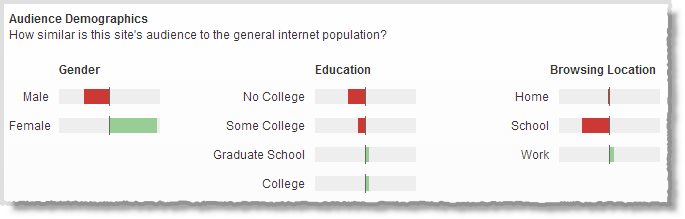
You might already have a good idea of who reads your blog through a quick look at your followers on Twitter, for example. But to get a better insight you could sign up to Alexa.com or Quantcast.com to see in depth information such as the gender or browsing location of your blog’s visitors.
Blogs have become one of the most fascinating and popular platforms upon which individuals may sell their wares, offer advice or simply journal about their daily lives.
But what is the point of having a blog if no one is going to read it?
There are many reasons why you’d would want to increase the traffic to your blog . It could be for monetary reasons, to gain more public exposure or to show off your skills. Bloggers want to see their sites develop, evolve and grow.
So, how can you get more visitors to your blog?
Here are 7 easy ways to increase traffic to your blog.
1. Optimize Your Content
The initial structuring of a blog should evolve around designing it to attract maximum traffic. Pages on your blog can be optimized to attract readers and potential consumers. This can be done by organizing content by putting it into categories that will enable readers to find what they are looking for quickly and easily.
This includes sub-titles, bullet points and lists.
Search engines pick up on themes of related content, so include keywords and keyword phrases. If you work a little on your blog’s SEO (Search Engine Optimisation) in this kind of way, you’re likely to get more search engine traffic.
2. Define Your Audience
The most important question a blogger can themselves is, Who is going to read my blog? Focus your content on what your blog is based on. Then carefully consider your target audience and address that audience directly. If you write what they want to read it’s quite likely that they’ll recommend your content to their peers.
You might already have a good idea of who reads your blog through a quick look at your followers on Twitter, for example. But to get a better insight you could sign up to Alexa.com or Quantcast.com to see in depth information such as the gender or browsing location of your blog’s visitors.
 3. Ensure The Blog Works Properly
Regardless of how many readers hit on a blog, if the blog is not working, as it should, visitors will not stay, and in most cases, will not return. It can be frustrating and off putting for readers to visit your site and discover that the page refuses to load.
One way to find a reliable web host is via a free service offered by WhoIsHostingThis.com. Find a high performance web host that load your web pages fast and you’ll be on your way to impressing visitors by having a consistently visible site.
It’s worth keeping in mind that Google will penalize your website or blog in its search rankings or blog if it takes longer than two seconds to load.
3. Ensure The Blog Works Properly
Regardless of how many readers hit on a blog, if the blog is not working, as it should, visitors will not stay, and in most cases, will not return. It can be frustrating and off putting for readers to visit your site and discover that the page refuses to load.
One way to find a reliable web host is via a free service offered by WhoIsHostingThis.com. Find a high performance web host that load your web pages fast and you’ll be on your way to impressing visitors by having a consistently visible site.
It’s worth keeping in mind that Google will penalize your website or blog in its search rankings or blog if it takes longer than two seconds to load.
 4. Advertise! Advertise! Advertise!
It always helps to get the word out about your blog, and the best way to do that is to advertise. There are two main types of advertising; paid and free.
Free Advertising
There are ways to advertise your blog without paying to do so. For instance, word of mouth through social media. Obviously there are monetary benefits to doing this. If you don’t already have one, get a profile set up on Twitter, Facebook, Pinterest, Google+ – these are all free.
Getting involved in various groups that specialize in the topic that is being addressed on your blog is a great way to get free advertising. If you share other people’s posts through a few quick clicks on Twitter your own content may well be shared in turn.
Paid Advertising
Paid advertising can be costly. There are 3 key types of paid digital advertising
4. Advertise! Advertise! Advertise!
It always helps to get the word out about your blog, and the best way to do that is to advertise. There are two main types of advertising; paid and free.
Free Advertising
There are ways to advertise your blog without paying to do so. For instance, word of mouth through social media. Obviously there are monetary benefits to doing this. If you don’t already have one, get a profile set up on Twitter, Facebook, Pinterest, Google+ – these are all free.
Getting involved in various groups that specialize in the topic that is being addressed on your blog is a great way to get free advertising. If you share other people’s posts through a few quick clicks on Twitter your own content may well be shared in turn.
Paid Advertising
Paid advertising can be costly. There are 3 key types of paid digital advertising
- Search engine advertising (such as Google Adwords)
- Advertising on Social Media with Facebook ads
- Banner advertising on other websites or blogs
Perhaps one of the easiest forms of paid advertising in the blogosphere is sponsoring or buying an advert placement on another blog. Seek adverts on sites that you see as having similar readers to your own – but ideally more traffic. That way, you’ll be specifically targeting potential readers for your own blog. They are more likely to click through to your blog, love it and follow you.
5. Submit the Blog to Search Engines
All of the major search engines have dedicated link sites that allow users to submit URLs to their engines. There are also directories that you can submit your site to. This can be done manually, or services can be hired to do the submissions for you. The results do not happen overnight.
Sometimes, it can take weeks for the blog to show up. But it is a good way to get the search engines to crawl it and pick it up in someoneís search results.
6. Use Tactics to Grab Your Readers Attention
When writing a blog entry, think of something that could be unique to your site and useful to your readers. Understandably, this can be tricky. But you could still write about something that other bloggers have already covered, but make your version exceptional and better than existing posts – perhaps take a different angle.
Develop a tone of writing particular to you and your blog. This will make your content memorable and personal. Also, make sure your posts are excellently researched to really impress your readers.
7. Keep Your Blog Fresh
Update your blog often.
Spend some quality time keeping your content fresh and interesting. Don’t let your design go stagnant either. It’ll need a re-vamp every now and then – an improved design can boost traffic. Create an inviting blog environment that is packed with eye-opening facts and information.
Think about the websites that you enjoy and model your own blogging formula after those.
Having a popular, successful blog takes patience, time and focus. It also takes hard work and determination. Some of it is luck too, but following easy pointers like these will help you on your way. Just be consistent and persistant – keep at it.


Subscribe to:
Posts (Atom)